Landing Page Work from Home Illustration: A Practical Overview
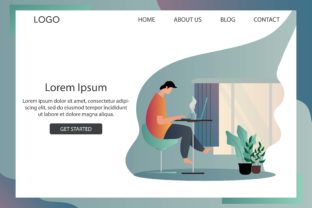
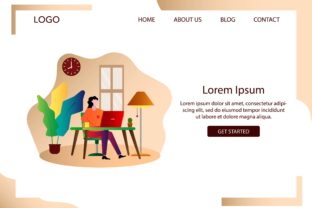
Landing Page Work from Home Illustration refers to a visual representation designed specifically for websites that promote remote work opportunities or home-based business models. These illustrations often depict scenarios where individuals are working in a home environment, using digital tools, and managing tasks independently. Unlike generic stock images, these visuals are tailored to communicate the concept of working from home effectively and professionally.
When considering design elements for a landing page, the choice of illustration can significantly impact user engagement and message clarity. Landing Page Work from Home Illustration offers a unique blend of context and relevance, making it an attractive option for businesses aiming to connect with a remote workforce or telecommuters.
What Makes Landing Page Work from Home Illustration Distinct?
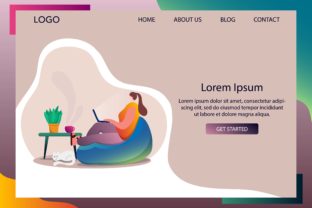
One of the key features of Landing Page Work from Home Illustration is its focus on relatability. These visuals often include elements such as laptops, ergonomic chairs, home offices, and digital communication tools. By incorporating familiar settings, they help users visualize themselves in similar situations, which can enhance trust and credibility.
Compared to other types of illustrations, such as abstract or cartoon-style graphics, Landing Page Work from Home Illustration provides a more grounded and realistic approach. This makes it particularly effective for industries like remote staffing, online education, and virtual services, where authenticity is crucial.
Comparing Options: Landing Page Work from Home Illustration vs. Other Visual Styles
When evaluating visual options for a landing page, it's important to consider the target audience and the message being conveyed. For instance, a tech startup might benefit from a sleek, modern illustration that emphasizes innovation and efficiency. In contrast, a home-based service provider might find Landing Page Work from Home Illustration more suitable due to its direct connection to daily life.
Other styles, such as flat design or 3D renderings, may offer a different aesthetic but could lack the contextual depth that Landing Page Work from Home Illustration provides. While 3D visuals can be visually striking, they may not always align with the practical, everyday nature of remote work.
Additionally, vector-based formats like AI, EPS, SVG, and DXF allow for scalable and high-quality visuals that maintain clarity at any size. This versatility makes them ideal for use across various platforms, including web pages, social media, and printed materials.
Strengths and Tradeoffs of Landing Page Work from Home Illustration
Landing Page Work from Home Illustration excels in creating a sense of familiarity and accessibility. It helps users quickly understand the value proposition of a remote work opportunity without requiring extensive text explanations. This can be especially beneficial for audiences who are time-constrained or prefer visual learning.
However, there are tradeoffs to consider. For example, while these illustrations are effective in conveying a specific scenario, they may not be as adaptable as more abstract designs. If the goal is to represent a wide range of remote work environments, a more flexible style might be preferable.
Another consideration is the level of customization. Some Landing Page Work from Home Illustrations may come with limited options for color schemes, layouts, or character designs. This could require additional effort or cost if specific modifications are needed.
Best-Fit Situations for Landing Page Work from Home Illustration
Landing Page Work from Home Illustration is particularly well-suited for businesses that aim to attract remote workers, freelancers, or entrepreneurs. It can also be useful for companies promoting home-based products or services, such as online courses, virtual coaching, or home delivery solutions.
For instance, a company offering remote customer support training might use this type of illustration to show how their program prepares individuals for real-world home office setups. Similarly, a platform connecting remote workers with employers could use these visuals to highlight the flexibility and independence of remote employment.
In contrast, a business focused on high-end, luxury goods might find that more stylized or minimalist illustrations better align with their brand identity. The key is to match the visual style with the overall tone and purpose of the landing page.
Limitations and Decision Factors
While Landing Page Work from Home Illustration has many advantages, it's not always the best fit. One limitation is that it may not appeal to all demographics. For example, younger audiences might prefer more dynamic or trendy visuals, while older audiences might appreciate the straightforwardness of home-based imagery.
Decision factors include the target audience, the message being communicated, and the desired tone. Businesses should also consider the availability of resources, such as access to design tools or the ability to customize illustrations. If a business requires a highly personalized look, investing in custom illustrations might be necessary.
Another factor is the competitive landscape. If many competitors are using similar visuals, a unique or differentiated approach might be more effective. However, consistency with industry standards can also be beneficial in building trust and recognition.
When to Choose Landing Page Work from Home Illustration
Landing Page Work from Home Illustration is a strong choice when the goal is to create a clear, relatable, and professional image of remote work. It works well for businesses that want to emphasize the practicality and convenience of working from home, especially in industries where trust and reliability are essential.
If a business is targeting a broad audience that includes both experienced remote workers and those new to the concept, this type of illustration can help bridge the gap by presenting a balanced view of home-based work. It also serves as an effective tool for educating users about the benefits of remote employment without overwhelming them with technical jargon or complex concepts.
However, if the primary objective is to showcase innovation, creativity, or a more abstract idea, alternative visual styles might be more appropriate. The decision should ultimately depend on the specific needs and goals of the business or project.
Realistic Examples and Practical Comparisons
Consider a scenario where a company is launching a new remote job board. Using Landing Page Work from Home Illustration could help illustrate the variety of roles available, from graphic design to software development, all within a home setting. This approach makes it easier for users to imagine themselves in these positions and understand the potential of remote work.
In contrast, a tech startup focusing on cloud computing might opt for a more futuristic or digital-centric illustration. While this could be visually engaging, it might not convey the same level of practicality or relatability as a home-based scene.
Another example involves an online course provider. A Landing Page Work from Home Illustration could show students studying from their homes, highlighting the flexibility and accessibility of online learning. This can be more effective than a generic classroom image, which may not resonate as strongly with the target audience.